

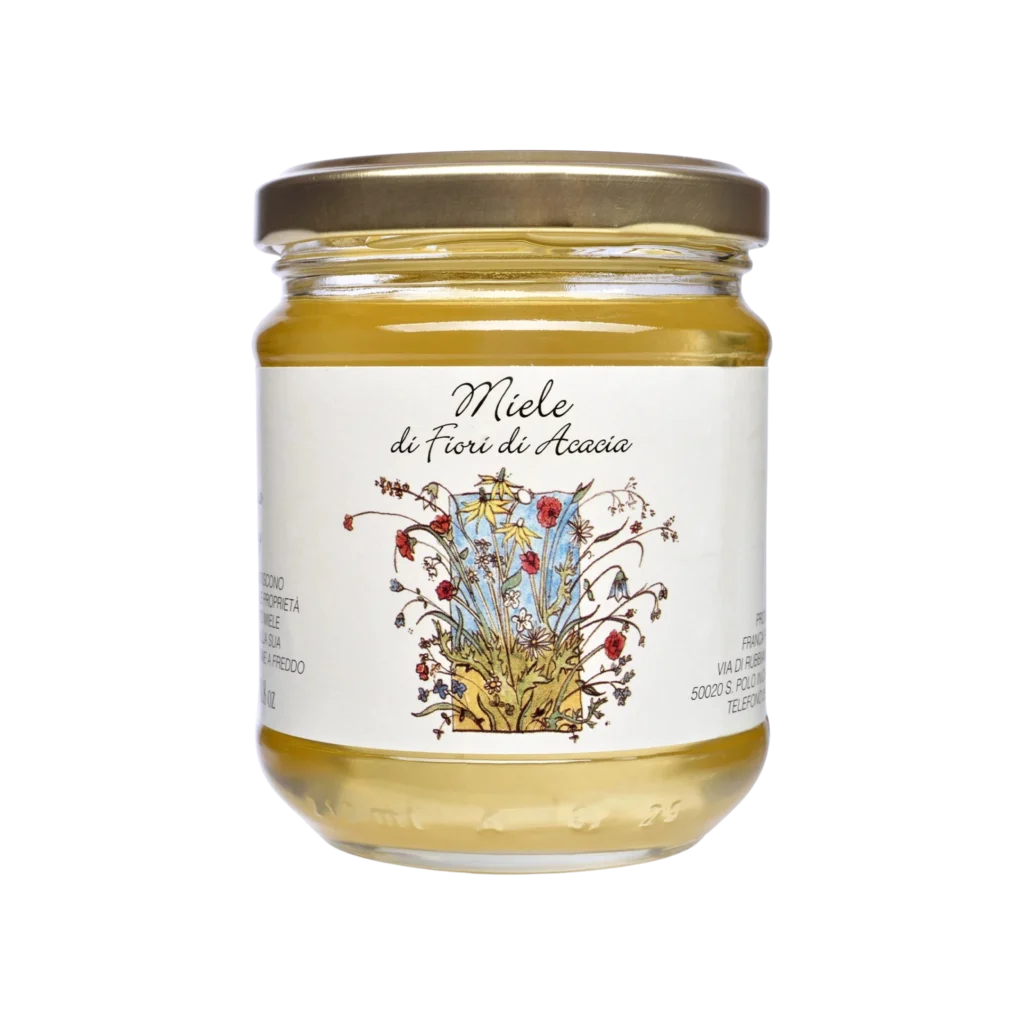

Acacia Honey
$18.99 8.8 oz


Acacia honey is extremely light colored, almost white with golden yellow-green hues. The nose is delicately floral, fruity, and persistent. The flavor is sweet with hints of vanilla, slightly acidic, and has a long, clean floral finish. The Acacia tree (Robinia pseudoacacia) is native to eastern North America. The tree was widely planted in Europe and belongs to the same family of Fabaceae or Leguminosae (beans/legumes). In Italy, the trees grow from 30 to 70 feet tall and blossom from May through June (you can smell their sweet blossom in the air during the season). The bees are drawn to the white cluster of blossoms’ calyxes filled with nectar, returning throughout the day for about ten days. Acacia honey production is not consistent every year: acacia nectar is dependent upon the weather. Acacia honey is the first honey children in Italy eat: many mothers give a spoonful of it before going to school. Acacia honey is also delicious to mix in yogurt or cream, as well as drizzle over fresh cheeses such as ricotta and stracchino. The perfect honey for glazing a roast chicken or using in any sauce or marinade. Delicious over perfectly ripe, peak-season peaches.
100% honey Preferences: Non-GMO.
Franca Franzoni & Simona Pappalardo

In 2021, master beekeeper Franca Franzoni, long known as the “Queen Bee” of Chianti, passed her apiary to her protégé Simona Pappalardo, ensuring the continuation of a deeply rooted tradition. Franca’s farm sits near the village of Polo, just south of Florence, surrounded by wildflowers, acacia groves, and chestnut trees — a landscape that shapes the character of each harvest.
Simona approaches beekeeping as a partnership with nature. Hives are thoughtfully placed near seasonal blooms, allowing the bees to forage from specific floral sources while maintaining a clean, pure expression of the land. From the careful crafting of wax frames in spring to the gentle centrifuge extraction of the honeycomb, every step honors traditional methods and the rhythm of the seasons.
The honey is allowed to settle and mellow before bottling, resulting in a luminous, artisan nectar that reflects both the Tuscan landscape and the stewardship behind it — floral, expressive, and deeply connected to place.
You may also like


People buy with this